





FREE PUDO LOCKER DELIVERY!
Key Features
- High-speed PETG formulation
- Designed for modern fast 3D printers
- Strong and durable
- Excellent layer adhesion
- Good impact resistance
- Less brittle than PLA
- Better heat resistance than standard PLA
- Low warping and shrinkage
- Good dimensional stability
- Good moisture resistance
- Good chemical resistance
- Suitable for functional parts
- Easy to print compared with more demanding engineering filaments
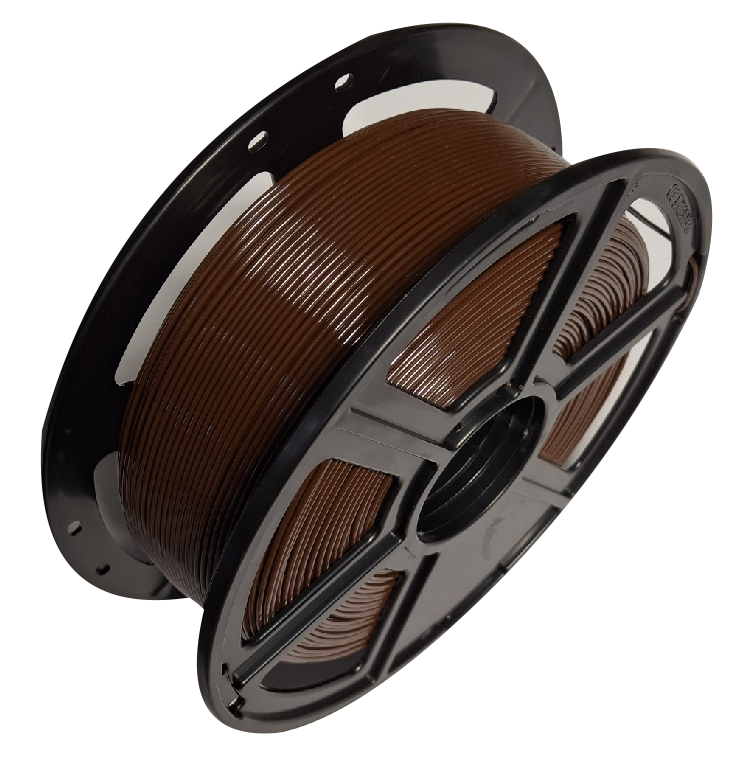
- 1.75mm filament diameter
- 1kg net filament weight
High-Speed PETG
3D Fusion Hyper PETG is designed to work well with the higher printing speeds available from modern 3D printers.
This makes it an excellent choice for users who want to reduce print times while still retaining the toughness, durability and strong layer bonding associated with PETG.
Actual achievable print speed will depend on the printer, hotend flow capability, nozzle size, layer height, model geometry and slicer settings.
Strong & Durable
PETG provides an excellent balance between easy-printing PLA and more demanding engineering materials.
Hyper PETG offers good:
- Mechanical strength
- Toughness
- Impact resistance
- Layer adhesion
- Flexibility
- Durability
Compared with standard PLA, PETG is generally less brittle and better suited to parts that will experience regular handling or mechanical stress.
Excellent Layer Adhesion
Strong inter-layer bonding makes Hyper PETG a great option for functional components.
It is well suited to:
- Brackets
- Clips
- Mounts
- Housings
- Containers
- Mechanical components
- Functional prototypes
- Replacement parts
This makes it a practical material for parts that need to perform rather than simply look good.
Low Warping
One of PETG’s biggest advantages is that it provides useful mechanical performance without many of the printing challenges associated with materials such as ABS.
Hyper PETG has relatively low shrinkage and warping, making larger functional models easier to print successfully.
For most applications, an enclosed printer is not required.
Better Heat Resistance Than PLA
PETG provides improved temperature resistance compared with standard PLA.
This makes Hyper PETG useful for:
- Electronics housings
- Workshop parts
- Equipment brackets
- Functional prototypes
- Household components
- Storage solutions
- Mechanical parts
For very high-temperature applications, more specialised materials such as ASA, ABS, PC or PPA-CF may still be more appropriate.
Good Moisture & Chemical Resistance
PETG offers useful resistance to moisture and many common chemicals.
This increases its suitability for:
- Containers
- Workshop organisers
- Protective housings
- Utility parts
- Equipment covers
- Functional prototypes
- General-purpose outdoor components
Suitability should still be evaluated for the specific chemical, temperature and mechanical requirements of the application.
Hyper PETG vs PLA
| Feature | Hyper PETG | PLA |
|---|---|---|
| Ease of Printing | Easy | Very Easy |
| Strength | Very Good | Good |
| Toughness | Very Good | Moderate |
| Brittleness | Low | Higher |
| Layer Adhesion | Excellent | Good |
| Impact Resistance | Very Good | Moderate |
| Heat Resistance | Better | Lower |
| Functional Parts | Excellent | Good |
PLA remains ideal for straightforward everyday printing, while Hyper PETG is generally the better option when durability and functional performance become more important.
Hyper PETG vs ABS
| Feature | Hyper PETG | ABS |
|---|---|---|
| Ease of Printing | Easier | More Demanding |
| Warping | Low | Higher |
| Enclosure Required | Generally No | Recommended |
| Strength | Very Good | Very Good |
| Layer Adhesion | Excellent | Very Good |
| Heat Resistance | Good | Higher |
| Functional Parts | Excellent | Excellent |
Hyper PETG is often easier and more convenient for general functional printing, while ABS becomes useful when higher temperature resistance is required.
Printing Recommendations
For best results:
- Use a suitable PETG slicer profile
- Use a heated build plate
- Keep the filament dry
- Ensure the first layer is correctly calibrated
- Reduce excessive cooling if layer adhesion suffers
- Adjust maximum volumetric flow for very high-speed printing
Keep Your PETG Dry
PETG can absorb moisture from the surrounding air.
Wet filament can cause:
- Excessive stringing
- Popping during extrusion
- Small bubbles
- Rough surfaces
- Poor surface finish
- Inconsistent extrusion
Store unused filament in a sealed container or vacuum bag with desiccant.
A filament dryer can be useful if the spool has been exposed to humid conditions for an extended period.
Ideal For
3D Fusion Hyper PETG is ideal for:
- Everyday 3D printing
- Functional prototypes
- Mechanical parts
- Brackets
- Mounts
- Clips
- Housings
- Containers
- Organisers
- Replacement components
- Workshop accessories
- Household products
- Utility parts
- Toys
- Small production runs
- Products for resale
Technical Specifications
| Specification | Details |
|---|---|
| Brand | 3D Fusion |
| Material | Hyper PETG |
| Filament Diameter | 1.75mm |
| Net Weight | 1kg |
| Printer Technology | FDM / FFF |
| High-Speed Formulation | Yes |
| Heated Bed Recommended | Yes |
| Enclosed Printer Required | No |
| Moisture Sensitive | Yes |
| Dry Storage Recommended | Yes |
| Primary Benefits | Speed, Strength, Toughness & Layer Adhesion |
Compatible Printers
3D Fusion Hyper PETG is suitable for most modern 1.75mm FDM/FFF 3D printers with a heated build plate, including many models from:
- Creality K1 Series
- Creality K2 Series
- Creality Ender Series
- Creality SPARKX Series
- Creality Hi Series
- Bambu Lab
- Other compatible FDM/FFF printers
Why Choose 3D Fusion Hyper PETG?
3D Fusion Hyper PETG is a versatile everyday filament that offers more toughness and functional capability than standard PLA without moving into difficult engineering materials.
Its combination of:
- High-speed printing capability
- Good strength
- Excellent toughness
- Strong layer adhesion
- Low warping
- Moisture resistance
- Easy printing
makes it a strong option for both hobby and professional use.


Reviews
There are no reviews yet.